Six of Canes, Seven of Pentacles, and the Queen of Ravens
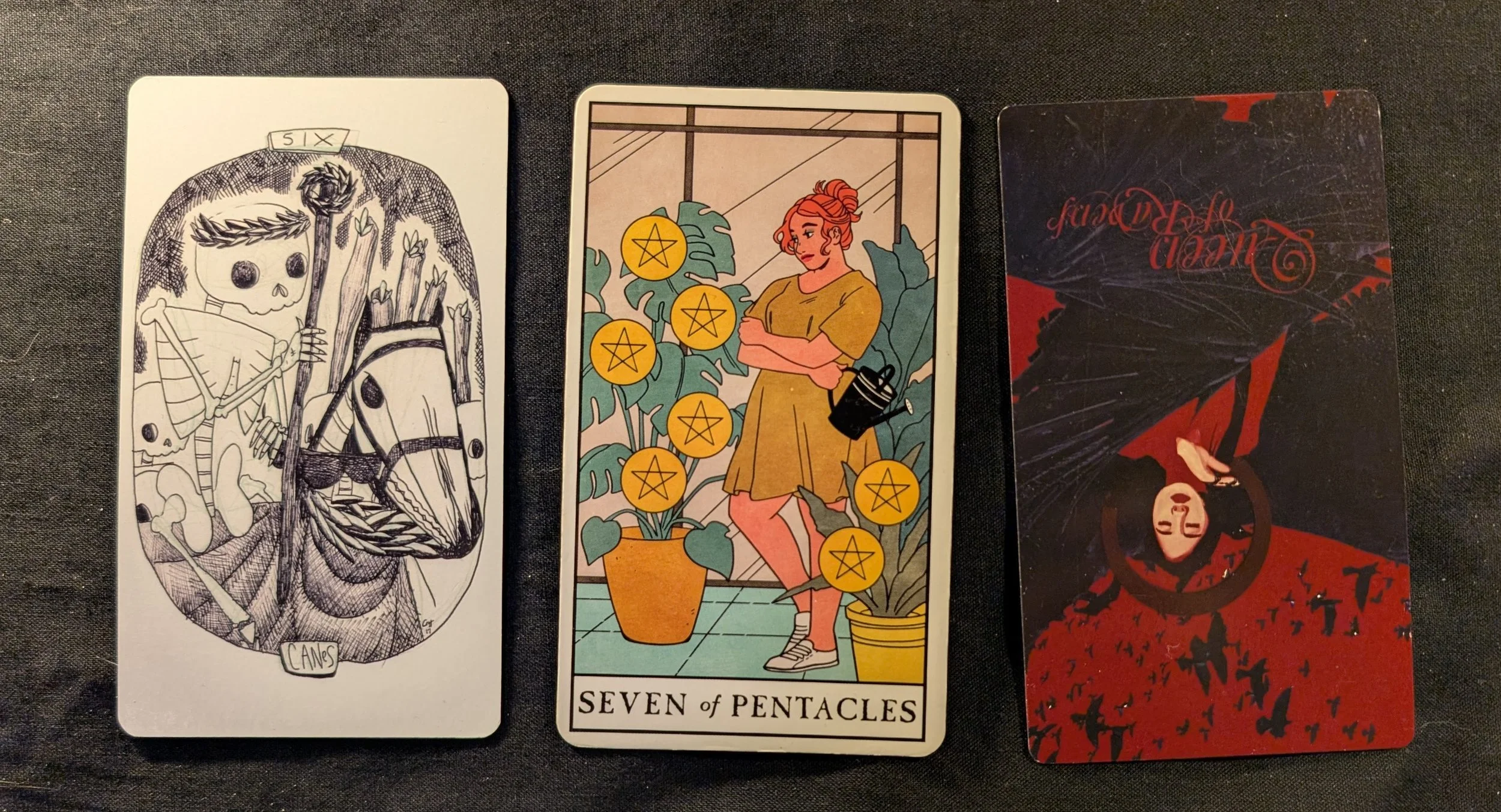
Traditionally, the Six of Canes (this version by Cat Rocketship) is a card of victory. The gallant figure donned with their laurel rides at the lead of a triumph. Time to celebrate. Take a moment to really think about what victory means for you. Victories, like defeats, are often temporary moments in our existence, and as you might expect victories and defeats wheel around each other. Also remember what theater you are working on: tactical victories can often set the stage for strategic defeats. Ever hear of a Pyrrhic victory? Pyrrhus won several battles, but eventually lost the war because his victories were so costly. Conversely, during the Second Punic War, the Roman Republic adopted the “Fabian strategy,” which was essentially a strategy of “delay, deny, but do not engage” as Hannibal raged through Italy. Eventually, despite Hannibal's brilliant victories, the Carthaginians were forced to withdraw.
Cultures have mixed messages about “victory”. We all seek it, but there are constant warnings about letting it go to your head, or getting exactly what you want. For example, during a triumph procession in Rome, great victors had a slave next to them who whispered, "Memento mori," or "Remember, victor, you are mortal." Be careful.
The Seven of Pentacles is a version from the Modern Witch Tarot by Lisa Sterle. The Seven is a complex card, while it might be about harvesting your work, part of the card shows dissatisfaction with the results. This dissatisfaction is in direct contrast with the clearly flourishing garden. Even in success how do you feel? It can also represent a shift between control and letting go. As every gardener knows, there is only so much you can do and you have to rely on nature for your garden. The final note here: the character on the card is materially successful, and the dissatisfaction may stem from a spiritual hunger. You’ll note the central character in the Seven is looking at the Six of Canes’ victory and feeling dissatisfied.
The Queen of Ravens by Seven Dane Asmund is interesting. The author of this card notes that she is a judge. This feels very Norse, like the two ravens that accompany Odin (Thought and Memory, if I remember correctly). The author goes off on how judgy the queen is, and that the card likely stands for a person. Cards representing people in your life don’t work for my tarot practice (it’s me, not the author), so let’s dig into the symbology of ravens. Like the moon, sun, and stars, ravens have been around for all of human culture and thus have a variety of meanings. Ravens in many cultures are considered symbols of death, although not in the harsh way that you would expect, but like a psychopomp that will lead your soul to its final destination. There is cold comfort in that. Ravens often act as a connection to the spiritual world. (Honestly, the Wikipedia article on the Cultural depictions of Ravens is fascinating.)
So many cards in the tarot are about beginnings and change. I see this one as about endings. Yes, this is a different kind of change, but so often we don’t think about how to stick the landing. All good things come to an end, and trying to fight the cosmos comes at a cost. The reversal indicates that you may be forestalling such an ending.
The cards are asking you to think about victory, and what that really means to you. To do that, you need to dig into your wants and needs, and see if they still serve you. We all change over time, and if you don’t consider how your needs change, you can’t fulfill them. Does this reframe what victory means for you? On some days, getting a hot meal and a shower may be your final victory, on others it may be crushing an important presentation. As the days change, so do your needs and so do your conditions for victory. What would happen if you got exactly what you wanted right now?
The Queen is there to guide you. She is there to tell you that it is ok to adapt and change. In these changes, some projects, ideas, beliefs, or habits may die. When that happens, how are you going to shepherd them on and give them the death they deserve? They may not serve you now, but they once did. Honor that. The reversal adds a couple of pointed questions: Have you tried to prevent the natural death of something? What is the cost of doing that?